Request for Callback
Fill out this form to download.
The brochure will be sent to the email you provide.
=


Fill out this form to download.
Thank You!
Your request for a callback has been successfully submitted. Our team will get in touch with you shortly. We appreciate your patience and look forward to speaking with you soon.
If you have any urgent concerns, please feel free to contact us directly at
+91 9007026542 or email us at [email protected]
Thank You for Your Interest!
Your request to unlock the free demo has been successfully submitted. Please check your email for further instructions and a link to access the demo. We hope you enjoy exploring the features and capabilities of our product.
If you have any questions or need further assistance, please feel free to contact us directly at
+91 9007026542 or email us at [email protected]
The brochure has been sent to your email. Kindly check your inbox, and if it’s not there, please check your spam or junk folder.

In today's fast-paced, digitally driven economy, the transport industry faces growing challenges such rising fuel costs, labor shortages, complex logistics etc. To stay competitive, numerous transport firms are adopting Enterprise Resource Planning (ERP) systems. Transport ERP provides an integrated platform to oversee all activities, including fleet scheduling, invoicing, route optimization and regulatory compliance.
What is ERP in the Transport Industry?
ERP (Enterprise Resource Planning) is a software tool that combines essential business operations into one platform. In the logistics and transport industry, this includes fleet management, route optimization, inventory monitoring, human resources, financial management and customer support.
ERP for transport enables real-time monitoring of vehicles, routes and shipments. This helps businesses in streamlining travel time, minimizing fuel consumption and swiftly reacting to traffic or weather interruptions. Route optimization not only reduces costs but also guarantees on-time deliveries, which are essential in areas where urban traffic is prevalent.

Transportation companies are required to adhere to both local and global transport regulations. ERP for transport helps in monitoring driver hours, vehicle maintenance timelines and compliance documentation to prevent penalties and guarantee safety.
3. Predictive Maintenance Alerts
Predictive maintenance notifications provide transport companies with advance alerts regarding vehicle condition, facilitating timely repairs prior to any breakdowns. This enhances fleet availability, minimizes emergency repairs and extends the lifespan of costly machinery.

4. Dynamic Load Optimization
ERP for transport helps in maximizing vehicle load capacity through advanced load planning tools. By optimizing cargo capacity while adhering to weight limits, businesses can reduce trips, fuel usage and emissions, which is crucial for environmental regulations and saving costs.
5. Freight Quotation & Rate Management
An efficient ERP for Transport streamlines freight rate management by enabling businesses to handle customer-specific pricing according to route, vehicle type, distance or consignment size. It allows for the rapid generation of formal quotations using dynamic pricing guidelines, helping sales teams in quickly addressing inquiries.
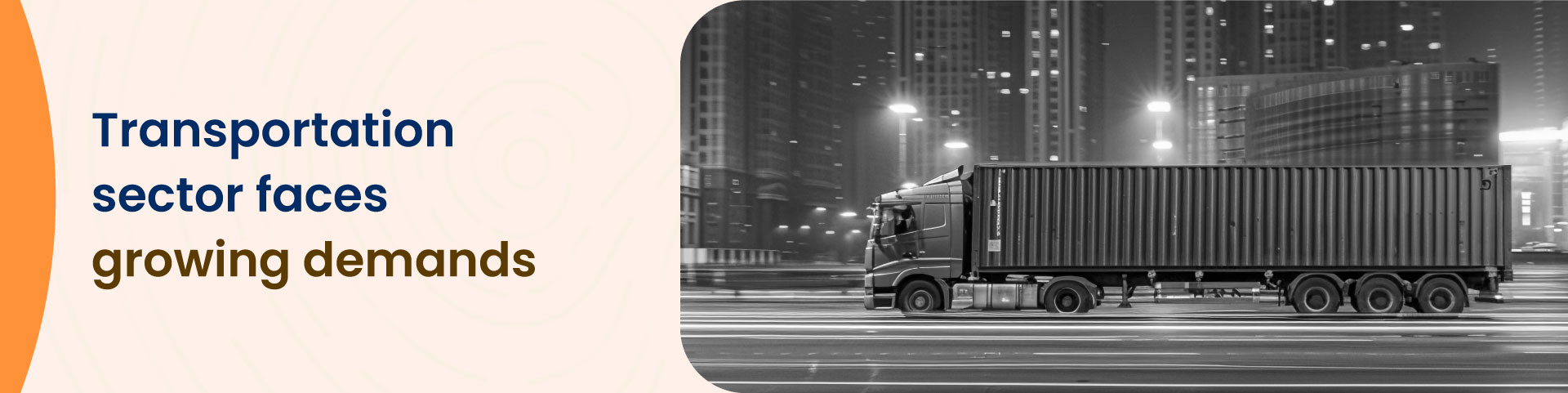
In conclusion, the transportation sector faces growing demands for speed, cost-effectiveness, and improved efficiency. Implementing a customized ERP solution for transportation and logistics is now a necessity, not a choice. ERP provides transport companies with the competitive advantage required in today's market by optimizing operations, enhancing visibility, and facilitating smarter decision-making.
Hosted on Certified Data Centers for Highest Level of Data Protection and Reliability.
Data Center Certifications


Your data and financial processes are tightly controlled and audited.


Built to protect high-risk financial data.


Security, quality, and continuity follow audited systems.