Request for Callback
Fill out this form to download.
The brochure will be sent to the email you provide.
=

Fill out this form to download.
Thank You!
Your request for a callback has been successfully submitted. Our team will get in touch with you shortly. We appreciate your patience and look forward to speaking with you soon.
If you have any urgent concerns, please feel free to contact us directly at
+91 9007026542 or email us at [email protected]
Thank You for Your Interest!
Your request to unlock the free demo has been successfully submitted. Please check your email for further instructions and a link to access the demo. We hope you enjoy exploring the features and capabilities of our product.
If you have any questions or need further assistance, please feel free to contact us directly at
+91 9007026542 or email us at [email protected]
The brochure has been sent to your email. Kindly check your inbox, and if it’s not there, please check your spam or junk folder.
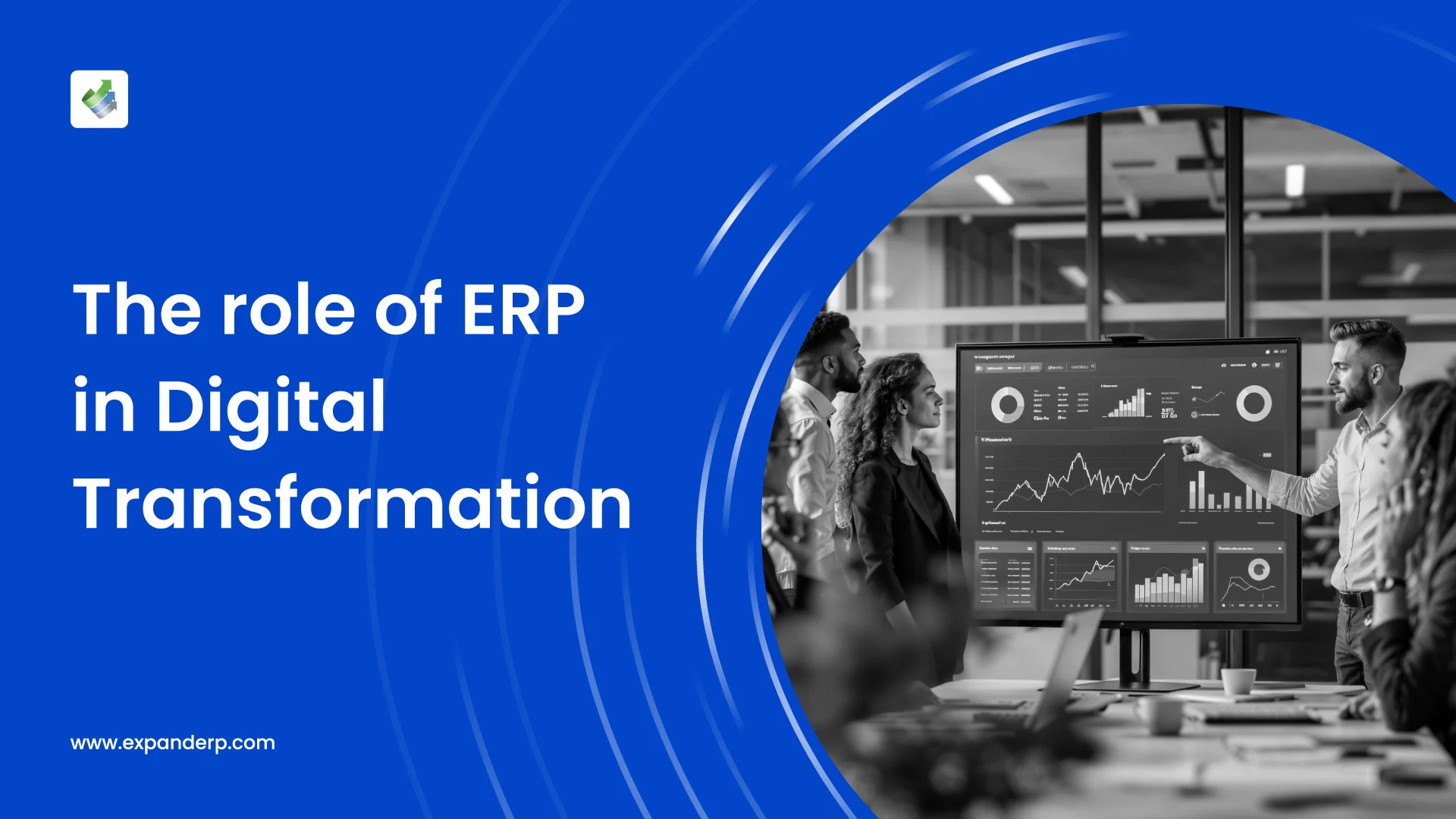
Digital transformation is more an option in this digital world but it is necessary for surviving in this highly competitive market. Talking about digital transformation, it refers to the use of advancing technology to fundamentally change how a business works and adapts to the market changes and demands. This transformation will help businesses achieve great heights and also stay agile. This transformation will help businesses achieve great heights and also stay agile.
Digital transformation with ERP
With the rise of modern technologies, the role of ERP is becoming crucial for enhancing the overall efficiency and success of a business. These software systems assist in consolidating the functions of all organizational departments into one cohesive platform, thereby optimizing business processes. This unification of functions not only promotes transparency within the ongoing processes but also enables access to real-time data on business performance, which accelerates the completion of various tasks.

Let’s take a look into the role of ERP in digital transformation:
ERP enhances efficiency by analyzing and displaying real-time data, improving accuracy and automating routine tasks like invoicing and inventory management. This reduces errors and frees employees to focus on strategic goals. With built-in analytics and reporting, businesses gain precise insights across operations. Faster, informed decision-making becomes possible through real-time performance tracking. Ultimately, ERP empowers organizations to streamline processes and drive growth.

The role of ERP is to provide a single, integrated source of business data, improving collaboration between departments. Instead of relying on fragmented spreadsheets, teams access real-time information seamlessly. This transparency enables faster and smarter decision-making. Finance can monitor budgets in real time, while the sales team can check inventory levels instantly, thus, enhancing faster decision making.

As businesses expand, there is a rise in data and customer numbers, which can cause traditional tools and methods to falter under the growing complexity, resulting in inefficiencies and disruptions. This is where the role of ERP systems as the core of digital transformation can also help these organizations in scaling as their business expands without compromising performance. Thus, supporting the changing market trends, customers needs, product lines, etc without overwhelming the workforce.
The role of ERP in digital transformation is particularly evident in how it ensures regulatory compliance in today’s ever-evolving digital world by automating compliance tracking and reporting. With the help of features like customizable modules, it can help organizations adjust to new laws, reducing the risk of fines and ensuring smooth operations amidst regulatory changes. As a result, this level of flexibility is essential in a digital transformation journey, where agility and adaptation to the changes are key to staying competitive.
Hosted on Certified Data Centers for Highest Level of Data Protection and Reliability.
Data Center Certifications


Your data and financial processes are tightly controlled and audited.


Built to protect high-risk financial data.


Security, quality, and continuity follow audited systems.